Media should be the most predictable part of your marketing
Tired of walking into leadership reviews hoping the numbers hold up? We build coordinated media programs where performance is table stakes, so conversations shift from fixing problems to planning what’s next.


Every channel has a role. We make sure
they're all working toward the same outcome.
From paid search to traditional media, every channel we run is part of the same coordinated program built to reach your consumer at every meaningful touchpoint across their decision journey.
Media strategy
We build strategies across the full media mix, aligned to consumer behavior, to find channel ceilings and scale performance over time.
COMMON OUTPUTS
Channel mix strategy, budget allocation guidance, audience prioritization, funnel and stage mapping, growth and scaling roadmap, performance benchmarks and targets
SEO / AI Search Optimization
We build unified search programs that earn visibility and trust across search and AI, driving traffic that converts.
COMMON OUTPUTS
Tehnical audits, performance reporting, local SEO, GMB profile strategy and governance, content optimization, UX + CRO audits, AEO, content, strategy, full funnel strategy
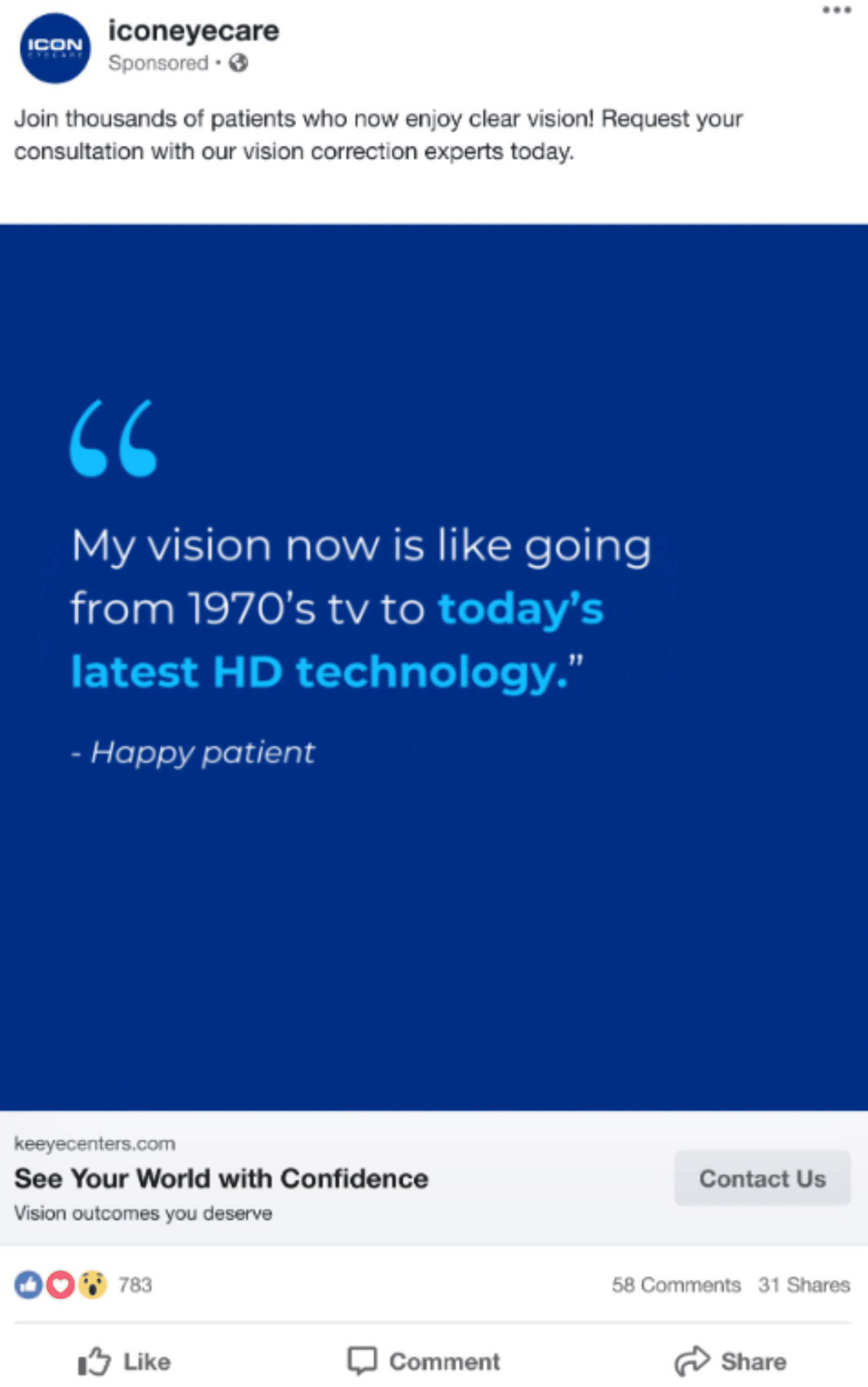
Paid social
We run paid social with first-party audience intelligence, targeting why people decide to drive efficient, compounding performance.
COMMON OUTPUTS
Account management and builds, ad copy development and testing audits and performance reviews, reporting and insights, budget allocation guidance, strategy and consulting
Paid search / SEM
We run paid search with precision, structuring every detail to drive net new demand and eliminate wasted spend.
COMMON OUTPUTS
Account management and builds, keyword and query strategy, ad copy development and testing, audits and performance reviews, reporting and insights, budget allocation guidance
Programmatic advertising
We run programmatic with audience intelligence and measurement that gives you visibility and control over performance.
COMMON OUTPUTS
Audience strategy and segmentation, channel and format planning, budget allocation and investment guidance, cross-channel integration strategy, platform and partner selection guidance
Traditional media
We plan and buy traditional media across TV, radio, out-of-home, and print, with defined roles and measurement to prove contribution.
COMMON OUTPUTS
Channel and format planning, media planning and buying, budget allocation guidance, measurement framework, cross-channel integration, performance reporting and analysis
Measurable media outcomes
Our media management has driven performance improvements across a variety of health and wellness categories.

Building a data-driven growth engine for a veterinary hospital network
- 533% ROAS in the first phase of paid search
- 1M+ users reached through paid social test
Parallel Path launched and scaled a multi-channel paid media program that coordinated across MedVet's growing network, building a performance framework that supported new hospital openings while optimizing existing markets simultaneously.
Increasing patient acquisition for Central Ohio’s largest health system
- 56x greater search engine visibility
- 87% increase in digital-driven conversions
Parallel Path developed and executed an integrated paid search and SEO strategy that treated OhioHealth not as a single brand but as a collection of local campaigns, each connected to the specific consumer and care needs of its market.
Driving consumer awareness for a national daytime dining restaurant
- 518% increase in leads per new store opening
- 13% increase in store traffic for targeted restaurants
Parallel Path built a coordinated local media program that supported First Watch across seasonal campaigns, new market entries, and existing location revitalization simultaneously, giving every restaurant in the footprint the marketing support it needed to perform.
Original thinking, research, and tools built for health and wellness marketing.
The Brand Reciprocity Model
Our model for understanding what drives health and wellness consumers to choose, not just engage. The lens we make every campaign decision through.
Consumer Motivation Study
Independent research designed to understand the motivations shaping consumer decisions across health and wellness.
SideCountry AI Studio
Our AI-supported strategy and execution studio for analysis, content planning, campaign development, and efficient activation.
When every channel owns its metric, nobody owns the outcome.
Media programs are typically structured around channel-level efficiency. On paper, every channel is performing. In practice, they are optimizing against each other.
The result:
- Budget flows toward platform metrics, not consumer decisions
- The gaps between channels go unmanaged
- Performance looks fine until business outcomes start surfacing questions
A coordinated program shifts that accountability from the channel to the outcome.

Media strategy
Have I gotten everything I can out of my current channels?
Am I limited by the channel, or how I’m using it?
Do I know what each channel is actually capable of?
Our media strategies account for behavior across seasons and stages of growth, with a clear plan for how the approach evolves as the strategy matures and your relationship with consumers grows.
We build channel strategies for ceilings, grounded in practitioner experience with your consumers.

SEO / AI Optimized Search (AEO)
Is more content the answer, or is authority what’s actually holding me back?
Is my brand showing up in AI-generated answers?
Is SEO still worth investing in, or is AI search replacing it?
The work that earns visibility in search is the same work that earns visibility in AI. We don’t split those into separate efforts or charge for them twice. We build unified search programs that improve how your brand shows up everywhere your consumer is looking.
Visibility and conversion are not the same thing. Most programs optimize for the first and leave the second to chance. The outcome is simple: visibility that compounds and traffic that converts.

Paid social
What’s the next paid social channel I should be trying?
How are top health and wellness brands really approaching targeting?
Should I trust the platform to understand my customer and optimize performance?
We go beyond what the platforms surface. Using first-party audience intelligence built around the actual motivations driving health and wellness purchase decisions, we build targeting strategies that reach the right consumer at the right moment, not the consumer the algorithm thinks looks right based on last week’s clicks.
The result is paid social that builds the kind of awareness that compounds into action, without starting over every time a platform changes the rules.



Health and wellness is not a category you learn from a brief.
We built our media expertise inside health and wellness, not around it. The regulatory constraints, consumer decision dynamics, and operational realities that shape this category are not things we had to learn on your account.
That fluency changes what we can do with your media. Decisions happen faster, programs are built around how your consumer actually decides, and nothing has to stop while we get up to speed.
Health & Wellness Industries Served
Fitness & Recovery
Nutrition, Vitamins & Supplements
Specialty Clinical
Sleep & Recovery
Pet Health & Wellness
Women’s Health
Hospitals & Health Systems
Mental Wellness
Consumer Health Technology
Healthy Dining
Personal Care & Beauty
Functional Health
Longevity & Preventative Wellness
Wellness Tourism
- and more…
Paid search / SEM
Am I driving net new customers, or paying for conversions I would have gotten anyway?
Am I over-relying on branded search to carry performance?
Is my keyword architecture and negative match strategy working as hard as it could?
We already know what works. Which terms drive net new demand in this category. How to structure campaigns across branded and non-branded intent without cannibalizing organic. Where to allocate budget across the funnel to build efficiency over time rather than burn it chasing volume.
Paid search is where the awareness every other channel builds either converts or disappears. When it is run well, it is the channel that gives a CFO confidence in your entire marketing program. When it is not, that confidence goes with it.

Programmatic advertising
Is programmatic just an awareness play?
Can I actually see what programmatic is doing?
Do I have control over programmatic performance, or is the platform a black box?
Display, video, and connected TV delivered to the right consumer before they start searching, with the audience intelligence and measurement in place to prove what is working. We run programmatic on enterprise-grade technology that gives you the visibility and control most platforms abstract away.
Reach that builds measurable demand, with the data to show what each placement contributed and where the consumer went next.

Traditional media
how do I tie traditional media to conversions?
Is traditional media more expensive than digital?
should traditional media part of my acquisition strategy?
Traditional media creates demand. The rest of the program has to be built to capture it. A well-placed TV spot or out-of-home campaign reaches health and wellness consumers before they start researching, building the awareness that shows up downstream as branded search, direct traffic, and eventual conversion. We plan and buy traditional as part of an integrated program, with the measurement infrastructure to connect what the channel produces to what the rest of the program closes.
For the right audience and the right category goals, it is one of the most efficient ways to reach people at scale, with every dollar traceable to its contribution across the full journey.

Is your brand building consumer relationships?
The Brand Reciprocity assessment scores your brand across three connectors: Shared Identity, Curated Experiences, and Intentional Connections. It tells you which stage you’re in and what to fix first.
12 questions. A specific score, a personalized diagnostic, and a prioritized action plan. No pitch.


common questions
Media questions from health and wellness marketers
Healthcare performance marketing applies the same outcome-focused discipline as any performance marketing program, connecting spend directly to measurable business results. The difference is in the constraints and complexity of the category.
Healthcare consumers make high-stakes decisions on longer timelines and with more research than consumers in most other categories. The regulatory environment shapes what can be said, how audiences can be targeted, and how conversions can be tracked. The definition of a result, a patient acquired, an appointment booked, a member enrolled, requires a measurement architecture that most general performance marketing setups are not built to handle.
An agency that understands healthcare performance marketing has to solve for all of those variables at the same time, not just optimize for the cheapest click.
Healthcare SEO operates under a higher standard of scrutiny than almost any other category. Google’s quality rater guidelines place health content in the Your Money or Your Life category, meaning pages that influence health decisions are held to stricter standards of expertise, authoritativeness, and trustworthiness than general content.
That changes the approach to SEO. Technical optimization matters, but it is not enough on its own. Content has to demonstrate real clinical or category expertise. Site architecture has to support the complexity of multi-service or multi-location organizations. And the authority signals that support rankings have to come from sources Google trusts in a healthcare context.
A general SEO agency can optimize a page. A healthcare SEO agency understands why Google ranks health content the way it does and builds an organic strategy around that reality.
Measuring paid search performance in healthcare starts with building the right infrastructure before a single campaign goes live. Standard paid search metrics, clicks, impressions, cost per click, tell you how a campaign is performing as a media buy. They do not tell you whether it is driving the outcomes that matter in healthcare, appointments scheduled, patients acquired, service line volume generated.
Getting from media metrics to business outcomes requires event tracking that captures the right conversion actions, attribution that reflects the longer and more complex healthcare decision journey, and reporting that connects channel performance to the operational data leadership actually tracks.
HIPAA compliance adds another layer, governing how patient data can be collected, stored, and used in the measurement process. Measurement in healthcare paid search is not a reporting exercise. It is a strategic infrastructure decision that has to be made correctly from the start.
Paid social in health and wellness performs best when it is built around consumer motivation rather than product features. Consumers engage with brands that understand their journey, reflect their values, and speak to the motivations driving their decisions, not brands that lead with claims or credentials.
That means creative strategy matters as much as media strategy. Audience targeting has to go beyond demographic segments to reach consumers at the right moment in their decision process. Performance measurement has to account for longer consideration cycles, where a social touchpoint early in the journey influences a conversion that happens weeks later through a different channel.
Brands that get the most from paid social treat it as an awareness and consideration channel with its own role in the full funnel, not a direct response channel measured purely on last-click results.
Multi-location paid media fails in one of two ways. Everything gets managed at the brand level and individual markets disappear into aggregate data that masks what is happening on the ground, or it gets managed location by location with no coordination across the network and no way to evaluate the program as a whole.
The answer is not just reporting at two levels. It starts with the foundational work before any media runs. We establish baseline expectations for each location based on market maturity, competitive density, and local demographics, grouping locations by shared operating conditions rather than raw performance. That baseline is what separates a location that is underperforming from one operating in a structurally harder market.
When performance deviates from expectations, the cause is diagnosable. A location that lags its peer group gets a targeted intervention, not a system-wide budget shift. A location that consistently outperforms its peers produces learnings the rest of the network can use.
The result is a media program where leadership can see the full network and individual markets in the same view, and where decisions are based on what is happening in each market rather than what aggregate data suggests.
The most important thing a health and wellness brand can look for in a media agency is category fluency. Not just familiarity, but a real understanding of how organizations operate, how their consumers decide, and the regulatory and operational constraints that shape every media decision.
Beyond category fluency, the right agency should be able to connect media investment to the outcomes your leadership team cares about, not just the metrics that look good in a report. They should have a clear methodology for how campaigns are planned, activated, and optimized, one that is specific enough to be meaningful and flexible enough to adapt to your priorities.
They should also function as an extension of your internal team, reducing operational burden rather than adding to it. An agency that requires constant management is not a media partner. It is another problem to solve.
When SEO and paid search are managed by separate agencies or teams, the gaps between them become expensive. Keyword intelligence from paid search, which terms convert, which audiences respond, which messages drive action, never makes it into the organic strategy. SEO content that ranks for high-intent queries is not amplified by paid search in the moments when organic visibility alone is not enough. And the measurement infrastructure that governs how both channels track and attribute results operates independently, making it difficult to understand the combined impact of your search investment.
In healthcare, there is also a compliance dimension. HIPAA governs how patient and consumer data can be collected and used across both channels. When one agency owns both, the tracking architecture, data handling protocols, and attribution model are consistent and compliant across the entire search program, rather than patched together from separate setups that may not align.
The result is a cleaner program, a more defensible compliance posture, and a clearer picture of what your search investment is delivering.

Take The First Step
Guidance for good.
At Parallel Path, we combine the thoughtfulness of a consultancy with the agility and execution power of a marketing agency.
Together, we’ll craft the strategy and content you and your brand need to tell your story and succeed.